In freezer cabinet manufacturing,insulation quality impacts energy efficiency,lifespan,and competitiveness.A common defect is the formation of air voids within the insulation,which weakens structure,reduces insulation,and can cause cracking.
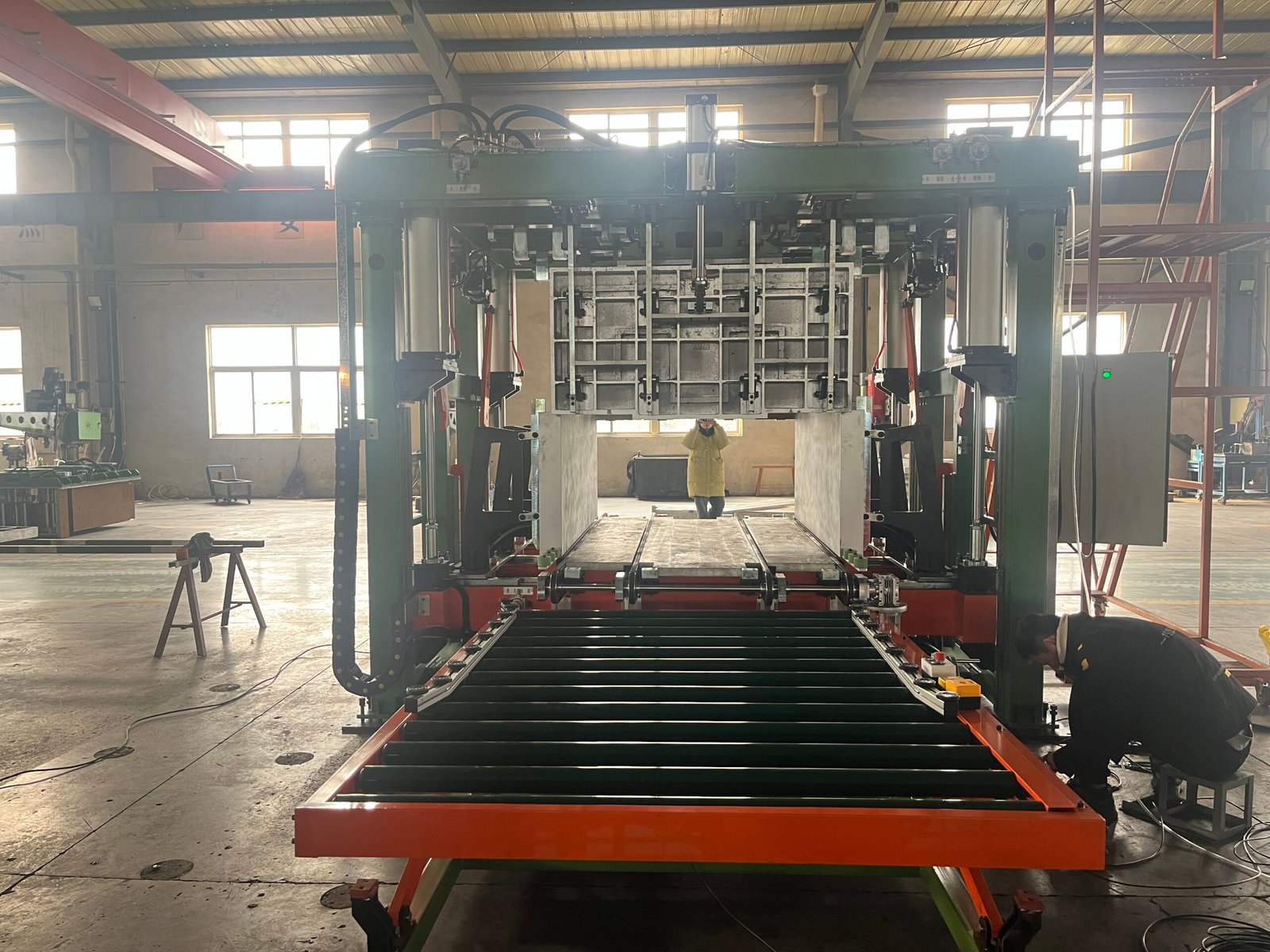
Understanding Air Voids in Freezer Mold Production
In most freezer manufacturing processes,polyurethane(PU)foam is injected between the inner liner and outer shell through a mold.The foam expands,fills the cavity,and cures to form a rigid insulation layer.
Air voids occur when gas pockets remain trapped inside the foam instead of being fully displaced or integrated into the foam’s cellular structure.While a uniform micro-cell structure is normal and necessary,large or clustered voids are considered defects.
These defects are especially critical in freezer molds because freezers demand higher insulation standards than ordinary refrigeration equipment.
Causes of porosity in freezer mold production
1. Raw Material Factors
1.1 Poor Polyurethane Material Quality
One of the primary causes of air voids is inconsistent or substandard PU raw materials.In some freezer mold supply chain,some small or cost-driven manufacturers may use:
- Low-purity polyols
- Isocyanates with unstable reactivity
- Recycled or improperly stored materials
These materials can react unevenly during foaming,generating excessive gas or unstable cell structures that collapse into voids.
1.2 Incorrect Material Ratios
PU foaming is highly sensitive to mixing ratios.Even a small deviation can lead to:
- Excessive gas generation
- Delayed curing
- Foam collapse after expansion
If the polyol–isocyanate ratio is inaccurate,the foam may expand too rapidly or too slowly,trapping air before the mold cavity is fully filled.
2. Mixing and Injection Process Issues
2.1 Inadequate Mixing of Components
Poor mixing is a hidden but common cause of virtual bubbles.When the raw materials are not fully homogenized:
- Localized over-reaction occurs
- Some zones generate more gas than others
- Foam density becomes uneven
This often results in clustered voids rather than evenly distributed cells.
2.2 Improper Injection Speed and Pressure
Injection parameters play a decisive role.In some freezer mold workshops,problems often arise when:
Injection speed is too fast,trapping air
Injection pressure is too low,failing to push foam into corners
Injection timing is inconsistent between batches
An overly aggressive injection may cause turbulence,while insufficient pressure prevents complete cavity filling—both scenarios promote void formation.
3. Mold Design and Manufacturing Defects
3.1 Poor Venting Design
One of the most critical mold-related factors is venting.If the freezer mold does not allow trapped air to escape during foaming:
- Air pockets remain inside the cavity
- Foam expansion compresses trapped air into voids
Some freezer molds,especially older designs,lack sufficient vent channels or rely on experience-based vent placement rather than simulation-based optimization.
3.2 Uneven Mold Cavity Geometry
Freezer cabinets often feature complex structural designs, including sharp corners, reinforcing ribs, and inconsistent wall thicknesses. These features can disrupt the natural flow of polyurethane foam within the mold.
When mold development fails to properly consider foam movement paths, expansion characteristics, and internal pressure balance, certain areas may fill unevenly, leading to localized air entrapment and the formation of internal voids.
4. Temperature and Environmental Control
4.1 Mold Temperature Is Too Low or Too High
Temperature directly affects reaction speed and foam viscosity:
- Low mold temperature→foam viscosity increases,flow becomes sluggish,air cannot escape
- High mold temperature→reaction accelerates too quickly,trapping gas
Inconsistent temperature control between different sections of the mold is especially dangerous and often leads to localized voids.
4.2 Workshop Humidity and Moisture
Moisture is an often-overlooked factor.Polyurethane reacts strongly with water,producing carbon dioxide gas.High humidity or moisture contamination can cause:
- Excessive internal gas generation
- Random void distribution
- Unstable foam structure
In coastal or rainy regions,inadequate humidity control can significantly increase defect rates.
5. Equipment and Maintenance Issues
5.1 Aging Foaming Machines
Outdated or poorly maintained foaming equipment may suffer from:
- Inaccurate metering pumps
- Unstable pressure output
- Delayed valve response
These issues directly affect mixing accuracy and injection consistency,leading to unpredictable void formation.
5.2 Blocked or Contaminated Injection Lines
Residual cured foam inside pipelines can partially block flow,causing pulsation during injection.This intermittent flow traps air and disrupts uniform expansion inside the mold cavity.
6. Process Control and Operator Experience
6.1 Lack of Standardized Operating Procedures
In some small freezer mold workshops,production still relies heavily on manual experience rather than standardized parameters.This leads to:
- Batch-to-batch inconsistency
- Difficulty in tracing defect causes
- High dependence on individual operators
6.2 Insufficient Training
Operators who lack a deep understanding of foaming chemistry may not recognize early warning signs such as abnormal expansion speed,surface sink marks,or delayed curing—allowing void issues to persist unnoticed.
How Freezer Molds Can Reduce Air Voids
To effectively reduce air voids in freezer mold production,manufacturers must move beyond single-point fixes and adopt a systematic,process-oriented approach.Based on industry practices in us,the following strategies have proven especially effective.
1. Upgrade Raw Material Quality and Ensure Stable Suppliers
Raw materials form the foundation of foam quality.Even the most advanced equipment and mold designs cannot compensate for unstable or low-grade polyurethane materials.Manufacturers should prioritize:
- High-purity polyols and isocyanates with consistent reactivity
- Additives and catalysts from reputable suppliers
- Clear material specifications and incoming inspection standards
Equally important is supplier stability.Frequent supplier changes often lead to variations in viscosity,reaction speed,and gas generation behavior,all of which increase the risk of air voids.Long-term cooperation with qualified suppliers allows manufacturers to fine-tune parameters and achieve predictable foaming behavior.
2. Strictly Control Mixing Ratios with Automated Metering Systems
Accurate material ratios are critical in polyurethane foaming.Manual or semi-automatic dosing often introduces small but cumulative errors that cause uneven expansion or excessive gas formation.
By adopting automated metering and dosing systems,manufacturers can:
- Maintain precise polyol-to-isocyanate ratios
- Reduce batch-to-batch variation
- Improve foam density uniformity
Automated systems also enable real-time monitoring and data recording,making it easier to trace defects back to specific parameters and continuously optimize the process.
3. Optimize Mold Venting Using Flow Simulation Tools
Poor venting is one of the most direct causes of trapped air.Traditional vent design often relies on experience,which may not be sufficient for complex freezer cabinet geometries.
Modern manufacturers should use foam flow and mold-filling simulation software to:
- Predict foam expansion paths
- Identify air entrapment zones
- Optimize vent size,position,and quantity
By releasing trapped air efficiently during injection and expansion,optimized venting significantly reduces the likelihood of large internal voids,especially in corners and deep cavities.
4. Maintain Consistent Mold and Ambient Temperatures
Temperature stability is a decisive factor in foam quality.Both mold temperature and ambient workshop temperature affect reaction speed,viscosity,and flow behavior.
Best practices include:
- Preheating molds to a controlled target temperature
- Ensuring uniform temperature distribution across the mold
- Avoiding large temperature fluctuations between production cycles
When mold temperature is too low,foam flow becomes sluggish and air cannot escape.When it is too high,the reaction may proceed too rapidly,trapping gas.Consistency—not extremes—is the key to minimizing void formation.
5. Implement Humidity Control in Foaming Workshops
Moisture management is frequently overlooked during production, yet it has a significant influence on polyurethane foaming reactions.
When excess water is present in the environment or materials, it reacts with isocyanates and releases carbon dioxide gas. This uncontrolled gas generation can create irregular bubbles within the foam, increasing the likelihood of internal void defects.
Manufacturers should:
- Maintain controlled humidity levels in foaming areas
- Store raw materials in dry,sealed environments
- Regularly inspect pipelines and tanks for condensation
In regions with high ambient humidity,installing dehumidification systems can dramatically reduce unpredictable gas generation and internal void defects.
6. Regularly Maintain Foaming Equipment
Even high-quality equipment can become a source of defects if maintenance is neglected.Common equipment-related causes of air voids include:
- Worn metering pumps causing inaccurate dosing
- Clogged mixing heads leading to incomplete blending
- Pressure fluctuations during injection
A systematic approach to preventive equipment upkeep is necessary to achieve consistent operating conditions throughout the production process.
Regular equipment inspection, precise recalibration, thorough cleaning, and timely replacement of worn components help ensure stable operation. These measures not only minimize air void formation but also improve machine reliability, extend service life, and reduce unexpected production interruptions.
7. Standardize Production Parameters and Train Operators
Human factors remain critical in freezer mold production.Without standardized operating procedures,even well-designed processes can fail.
Manufacturers should:
- Document optimal parameters for each mold and product
- Establish clear operating instructions for injection,curing,and demolding
- Train operators in both practical operation and basic foaming principles
Well-trained operators can identify early warning signs—such as abnormal expansion speed or surface irregularities—and make timely adjustments before defects become severe.
8. Move Toward Data-Driven Quality Control
Leading freezer mold manufacturers are increasingly adopting data-driven management,using sensors and digital records to track temperatures,pressures,ratios,and defect rates.This approach allows continuous improvement rather than reactive troubleshooting.
Our freezer molds have already seen significant reductions in void-related defects,improved insulation performance,and higher customer satisfaction.
The formation of numerous air voids in freezer mold production is not caused by a single factor,but rather by a combination of raw material quality,process parameters,mold design,environmental conditions,and human operation.
Only by addressing air void issues at their root can freezer mold manufacturers ensure stable quality,reduce rework costs,and remain competitive in both domestic and international markets.