Low Pressure PU Foaming Machine — Overview
A low pressure PU foaming machine meters and mixes two or three liquid polyurethane components (polyol, isocyanate and optional additives) through a mechanical mixing head and dispenses the reacting blend into a mold or cavity. Unlike high-pressure systems, a low pressure polyurethane foaming machine mixes at roughly 2–20 bar using a rotary stirrer, which makes it cost-effective, easy to maintain and well suited to flexible and semi-rigid molded foam.
Because the mixing head recirculates between shots, a low pressure foam dispensing machine handles frequent color and formula changes, making it a flexible choice for varied molded parts. Yongjia builds low pressure PU foaming machines with customizable output, two- or three-component metering, programmable shot weight and tailored mixing heads to match your part size and cycle time.
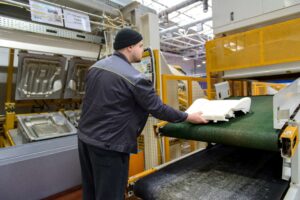
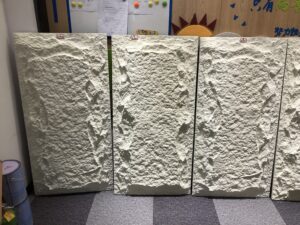
Typical applications include PU gaskets and filter end-caps, memory foam pillows, automotive and bike seats, insoles, decorative cornices, faux stone and anti-fatigue mats. For higher output rigid foam and panel lines, see our high pressure PU machine; for gasket sealing specifically, see the PU gasket dispensing machine.
Buyers also describe this equipment as a low pressure PU foam injection machine, foam dosing machine or foam dispensing machine — the terms all refer to the same low pressure metering-and-mixing principle. Whether your process pours into an open mould, injects into a closed cavity or doses foam onto a substrate, the machine is configured with the matching mixing head, shot-weight programme and swing arm or fixture.
Machine Structure
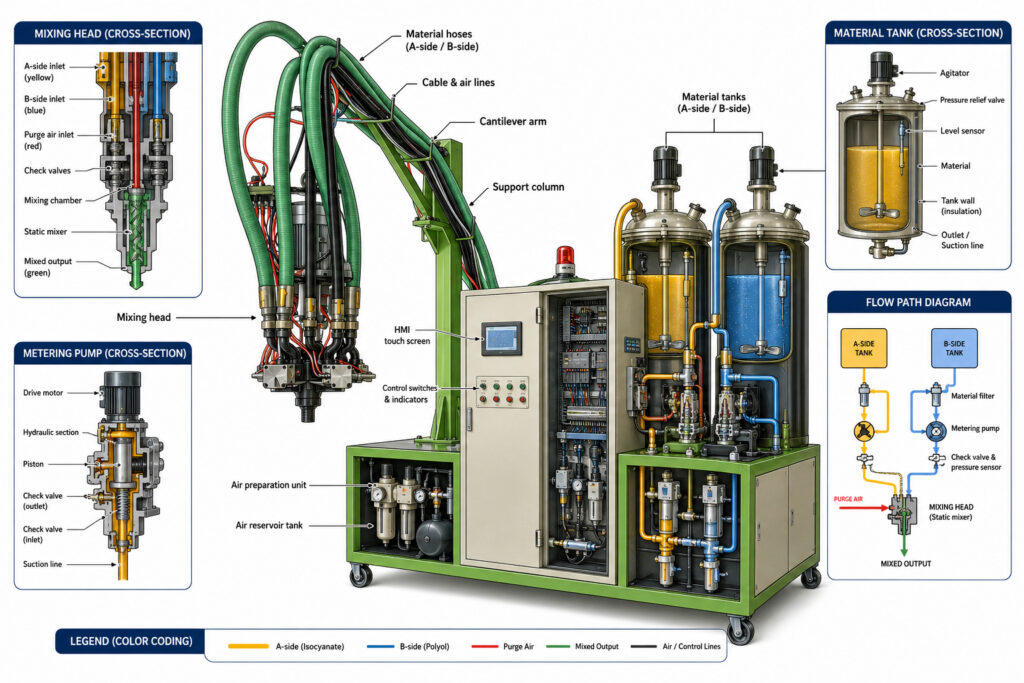
How It Works
A low pressure PU foaming machine meters each component, blends them mechanically in a recirculating stirred mixing head at low pressure (2–20 bar), and pours the mix into your mould or cavity.

Technical Parameters
| Foam Application | Rigid / flexible / integral-skin foam |
| Mixing Method | Low-pressure mechanical stirring (~2–20 bar) |
| Model Series | SPU-LS (2-component) / SPU-LR (3-component) |
| Shot Weight / Output | 15–2500 g per shot (model-dependent) |
| Components | 2 to 11 component |
| Pigment / Filler | Supported |
| Control System | DELTA / SIEMENS PLC + DELTA HMI touch screen |
| Customization | OEM/ODM, CE — mixing head, output & automation configurable |
Core Components
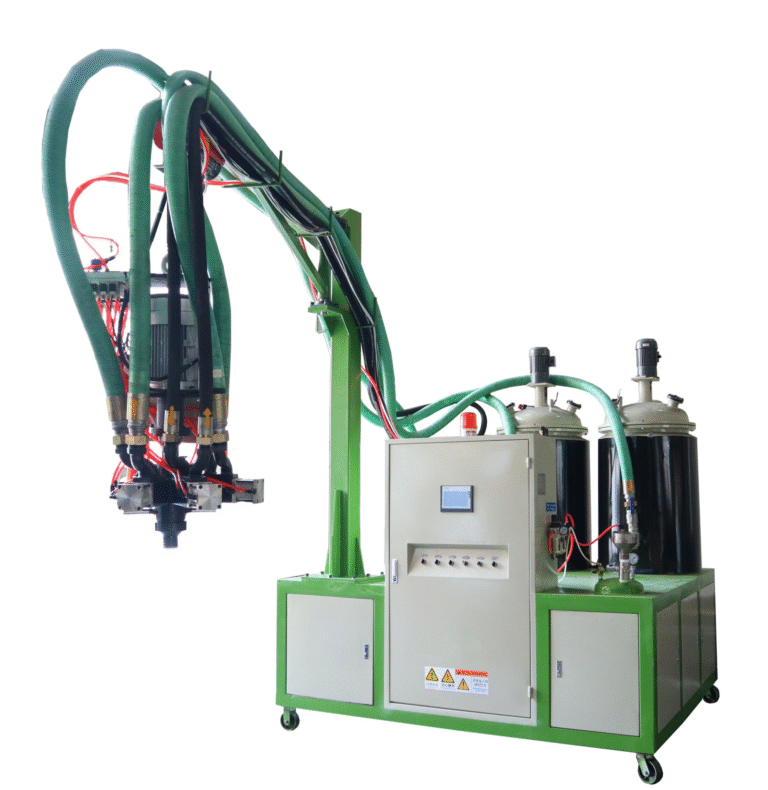
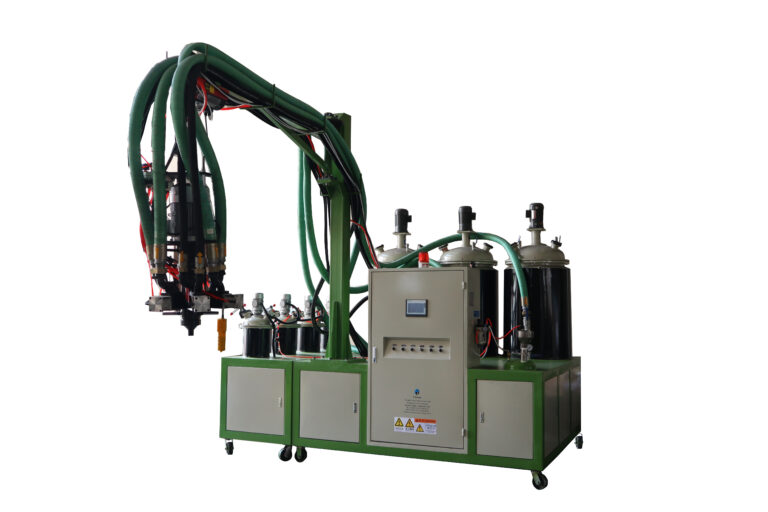
Low Pressure Machine Types
Choose by how many separate metered streams your formula needs — from a simple two-component build to a multi-component system with up to eleven streams.
Low Pressure vs High Pressure
Low pressure suits flexible and molded foam, integral-skin parts and frequent formula or color changes at small-to-medium output; high pressure suits high-output rigid foam and continuous panel lines. The right choice depends on your part, output, mould count and how often the formula changes.
| Low Pressure | High Pressure | |
|---|---|---|
| Mixing method | Mechanical / dynamic stirring | High-pressure impingement (self-cleaning head) |
| Solvent flush | Yes — cleaning tank | Not required |
| Output | Shot 15–2500 g, small to medium | High, 90–450 kg/min |
| Best for | Flexible / molded / integral-skin foam, frequent changes | High output, stable formula, rigid & panels |
| Components | 2 to 11 component | Two to three component |
| Investment | Lower | Higher |
See our high pressure PU machine or the guide High vs Low Pressure: which is better?
How to Choose the Right Configuration
Tell us your product and target shot weight and our engineers size the machine. As a quick guide:
| Your product / requirement | Recommended configuration |
|---|---|
| Memory-foam pillow | Two-component low-pressure machine + pillow mould / carousel |
| Car or bike seat, cushion | Molded-foam build with matching mixing head and mould line |
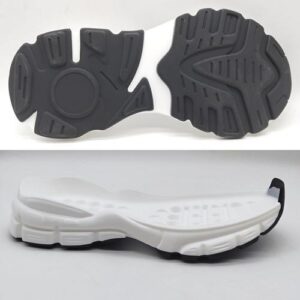
| Shoe sole / insole | Low-pressure machine sized to shot weight + sole mould line |
| Gaskets & filter end-caps | FIPFG / dispensing configuration — see the gasket dispensing machine |
| Frequent color or formula changes | Recirculating head + cleaning tank; 3-to-5-component for additives |
| Integral-skin parts (armrest, steering) | Skin-foam build with temperature control |
| High-output rigid foam / panels | Compare our high pressure PU machine |
Configuration & Options
Every machine is built to your product, shot weight and mould. A typical build:
- Two-component low-pressure metering
- Mechanical mixing head on a swing arm
- Heated, agitated POLY / ISO day tanks
- Precise metering pumps with dedicated motors
- DELTA PLC + touch-screen HMI
- Solvent-flush cleaning tank
- Three- to five-component metering
- Pigment / color and filler dosing
- SIEMENS PLC upgrade
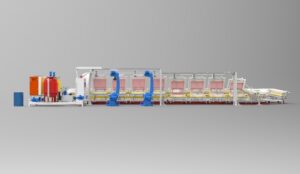
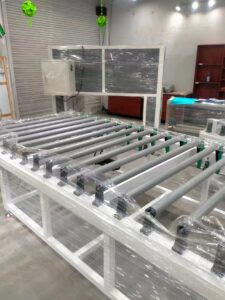
- Carousel, conveyor or rail mould line
- Drying / curing oven line integration
- Custom output, voltage and tank volume
- Moulds & fixtures, installation, operator & formula training, OEM/ODM, CE and a five-year warranty
Applications & Advantages
Yongjia’s low pressure PU foaming machines are used across furniture and bedding, automotive seating, footwear, sealing and decorative products. The recirculating mixing head and solvent-flush cleaning tank make color and formula changes fast, while 2-to-5-component metering supports pigment, filler and additive systems — a flexible, cost-effective choice from a China manufacturer since 2006, exported to 60+ countries with OEM/CE support.
The same mechanical mixing platform also meters and pours two-component EV battery pack potting compound — a low-viscosity PU (or PU/epoxy) encapsulant dispensed around cells and busbars for thermal management, dielectric insulation and vibration damping. Precise ratio control and programmable shot weight keep the pour consistent across pack sizes and formats.
Frequently Asked Questions
Is a low pressure foam machine the same as a PU foam injection or dosing machine?
What is a low pressure PU foaming machine?
What is the difference between low pressure and high pressure PU foaming machines?
What can a low pressure PU foaming machine produce?
How many components and what output can the machine handle?
Can the machine be customized, and what is the MOQ and lead time?
Get a Price Quote
Tell us your output, mold and automation requirements — our engineers reply within 24 hours with an exact price, configuration and lead time. OEM/ODM & CE supported.
Request a Quote →WhatsApp Us